
Transpose sheet music for alto or tenor saxophone
Alto and baritone saxophones are in E-flat: written C sounds E-flat, a major sixth lower for alto. Tenor and soprano saxophones are in B-flat: tenor sounds a major ninth lower than written, soprano a whole step lower. So to play concert-pitch music, choose a written key a major sixth higher for alto (three more sharps, concert C → A major) and a whole step higher for tenor and soprano (two more sharps, concert C → D major). PUJIAN transposes a photo or PDF of the score to the key you choose. For alto and tenor the key, key signature and note names come out right, but the notes sit one octave lower than standard sax parts, so you raise the whole part by an octave.
Upload a scoreSign up with email3 free pages on sign-up · failed pages are not counted
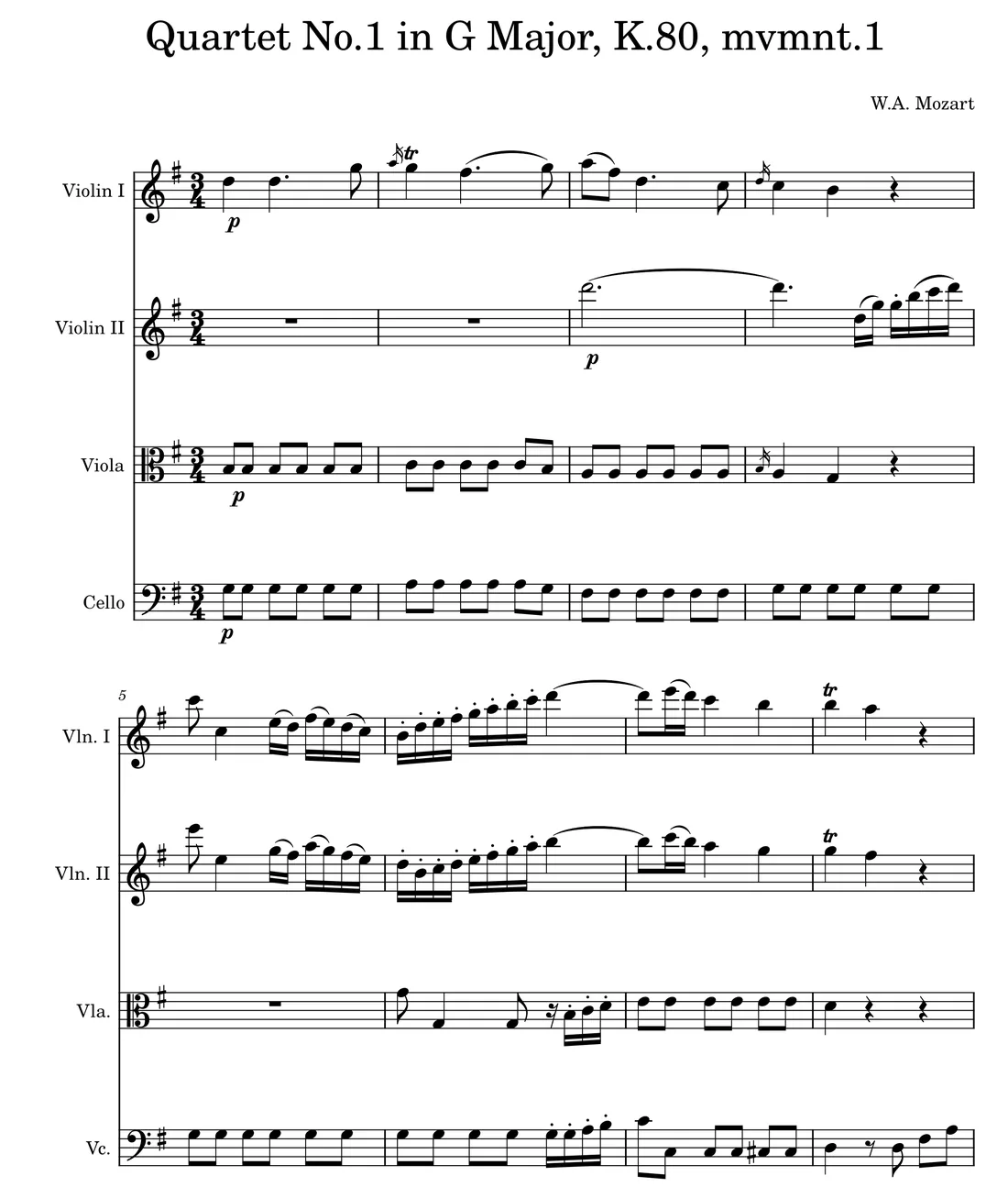
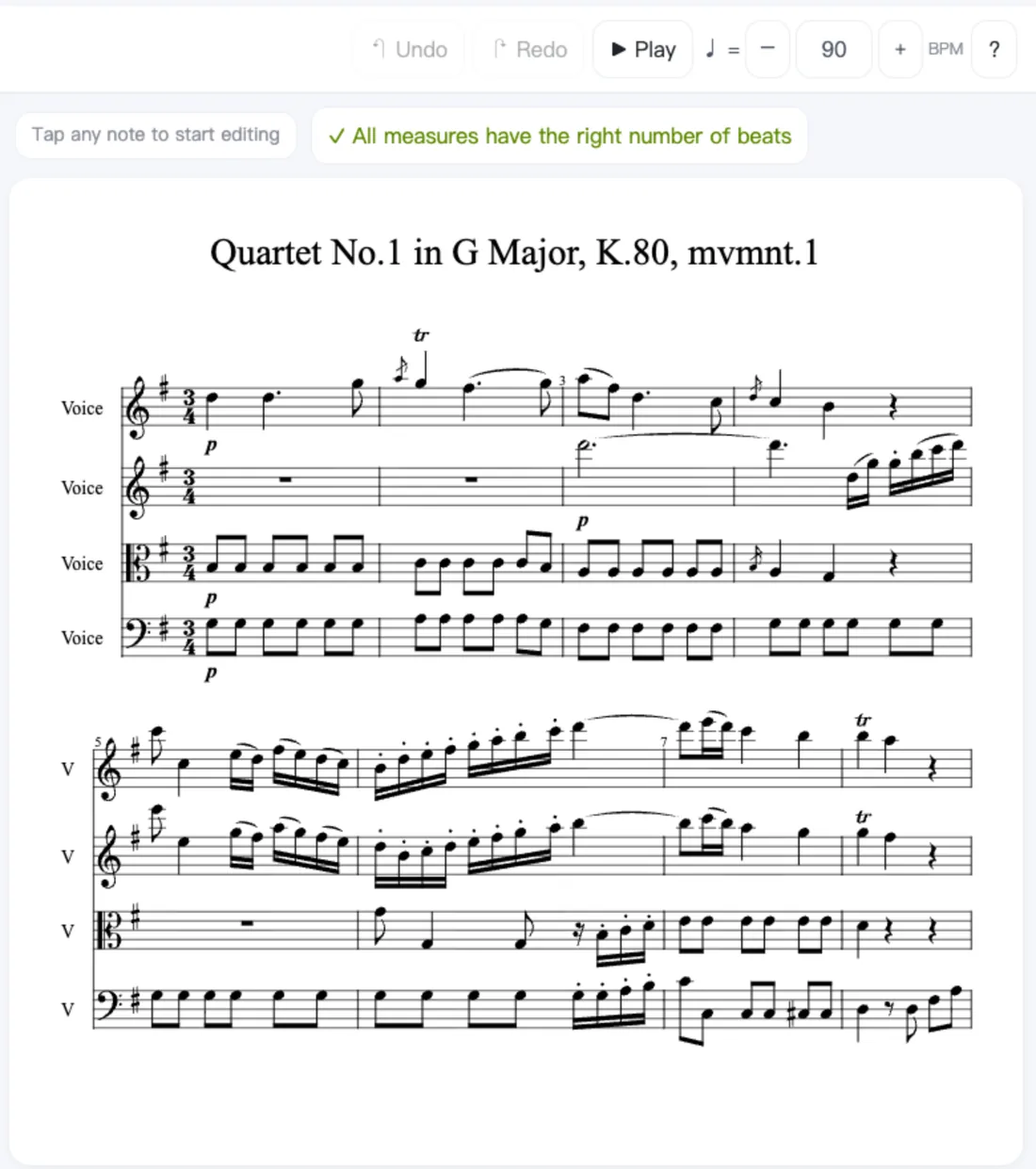
Key chart: concert pitch → saxophone
| Concert key | Alto / baritone sax (E-flat) | Tenor / soprano sax (B-flat) |
|---|---|---|
| C major | A major (3 sharps) | D major (2 sharps) |
| F major | D major (2 sharps) | G major (1 sharp) |
| B-flat major | G major (1 sharp) | C major |
| E-flat major | C major | F major (1 flat) |
| A-flat major | F major (1 flat) | B-flat major (2 flats) |
| G major | E major (4 sharps) | A major (3 sharps) |
| D minor | B minor (2 sharps) | E minor (1 sharp) |
How to do it with PUJIAN
- Sign up with your email at seqnote.ink (3 free pages).
- Open Transpose and upload a photo, scan or PDF of the piano part, lead line or concert-pitch score, or pick a score already in your library (no pages used).
- Check the original key, then choose the target key from the chart.
- Play the result, then export MusicXML (paid plans and page packs) and raise the whole part by an octave in your notation program if needed (see below).
The octave: what to check
- PUJIAN moves the music to the key you choose by the shorter way, never more than six semitones up or down. It does not use the instrument name.
- Alto sax: concert C to A major is three semitones down by the shorter way, but standard alto parts are written nine semitones up. Key signature and note names match a standard alto part; the notes are one octave lower.
- Tenor sax: concert C to D major is two semitones up, while standard tenor parts are written fourteen semitones up (an octave plus a whole step). Again one octave lower than a standard tenor part.
- Soprano sax: two semitones up is exactly the standard, so nothing to fix.
- Baritone sax is written an octave above alto, so the result is two octaves below a standard baritone part.
- Fixing it: export MusicXML, open it in MuseScore, select all and press Ctrl+Up (Cmd+Up on Mac) to raise everything an octave. Other notation programs have a similar command.
Other things to check
- Playback plays the notes as written on the transposed page, not at concert pitch.
- Wide-range piano music may go beyond the saxophone's range; move those passages by an octave.
- Key changes in the middle of a piece and passages with many accidentals: compare with the original.
FAQ
- My alto part came out in the right key but sounds low. Is it wrong?
- The key and notes are right; the part is one octave below the usual alto sax octave because PUJIAN transposes the shorter way. Raise it by an octave in your notation program.
- Can tenor and soprano sax share a part?
- Yes for the key: both are in B-flat. A tenor sounds an octave lower than a soprano reading the same part.
- Can I go from an alto part back to concert pitch for piano?
- Yes. Choose the concert key from the chart, for example E-flat major for a part written in C major. Check the octave the same way.
- Is PUJIAN free?
- You get 3 free pages when you sign up with your email. Recognition and playback work on the free pages. Exporting MusicXML or MIDI, the online editor, part splitting and vocal separation are included in paid plans and page packs (from $4.99 for 20 pages). Payments are processed by Creem.