
Transpose sheet music for B-flat clarinet, trumpet or soprano sax
B-flat clarinet, B-flat trumpet and soprano saxophone sound a whole step (a major second) lower than written. To play music written at concert pitch, such as a piano part, a song or a flute part, the part has to be written a whole step higher, in a key with two more sharps or two fewer flats: concert C becomes D, concert F becomes G, concert B-flat becomes C. With PUJIAN you upload a photo or PDF of the concert-pitch score, choose the B-flat key as the target, and get the whole score moved up a whole step, with the new key signature and accidentals.
Upload a scoreSign up with email3 free pages on sign-up · failed pages are not counted
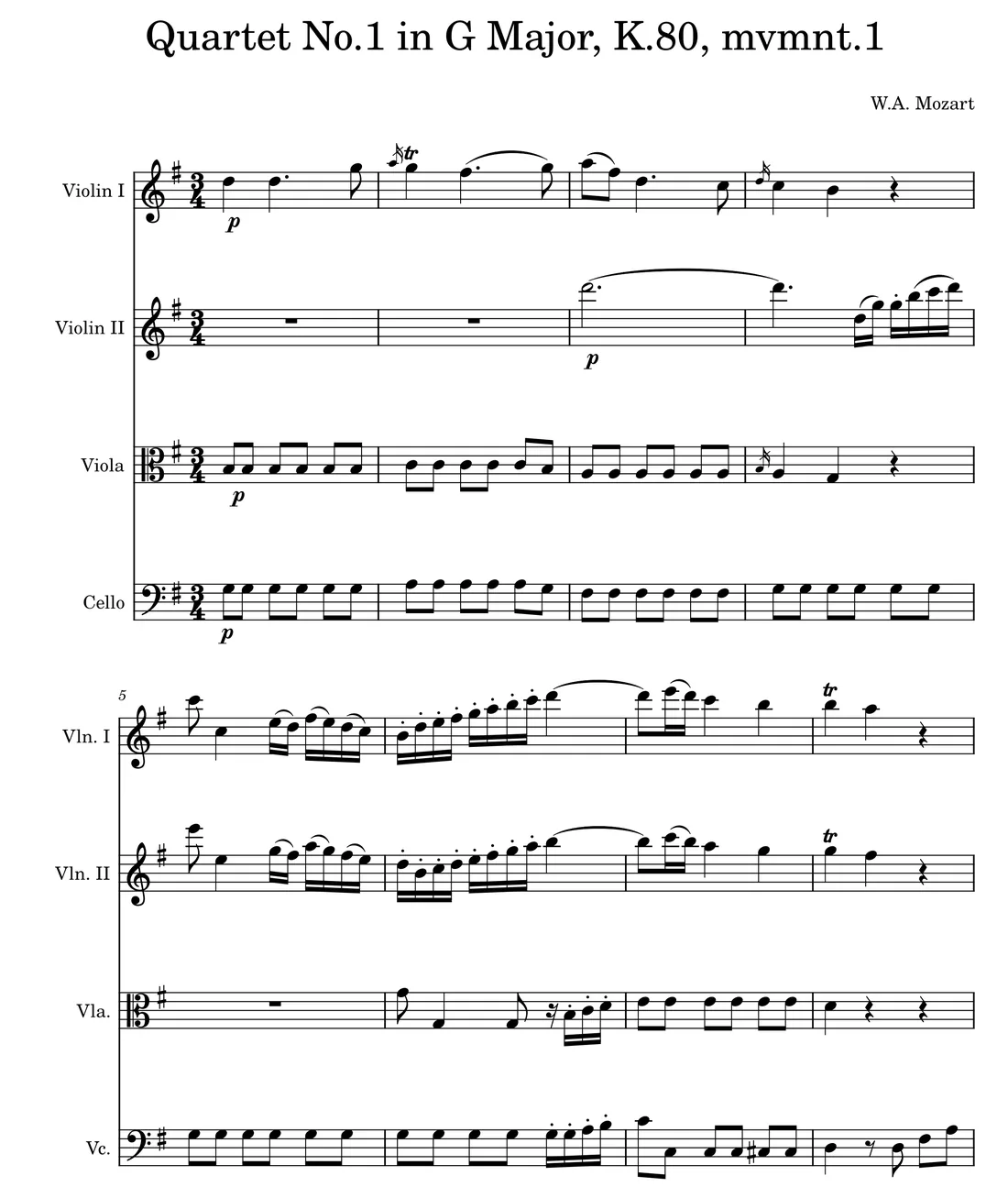
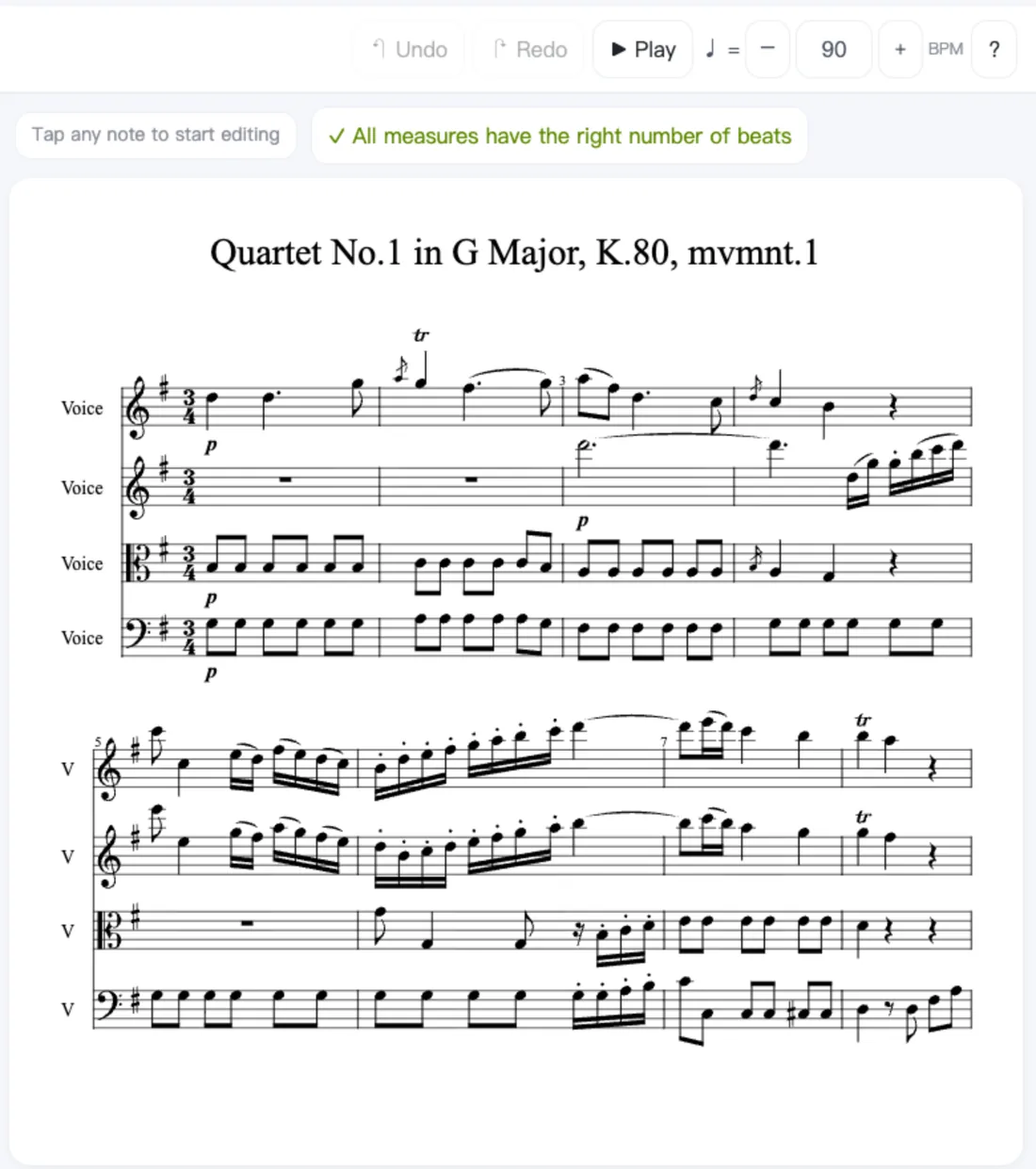
Key chart: concert pitch → B-flat instrument
| Concert key | Written for B-flat clarinet / trumpet / soprano sax |
|---|---|
| C major | D major (2 sharps) |
| F major | G major (1 sharp) |
| B-flat major | C major (no sharps or flats) |
| E-flat major | F major (1 flat) |
| A-flat major | B-flat major (2 flats) |
| G major | A major (3 sharps) |
| D major | E major (4 sharps) |
| D minor | E minor (1 sharp) |
| G minor | A minor (no sharps or flats) |
How to do it with PUJIAN
- Sign up with your email at seqnote.ink (3 free pages).
- Open Transpose and upload a photo, scan or PDF of the concert-pitch music, or pick a score already in your library (no pages used).
- Check the original key PUJIAN detected; it is the key written on the page.
- Choose the target key from the chart above, for example D major for a piece in C major.
- Play the result to check it, then download it or export MusicXML for your notation program (paid plans and page packs).
Which instruments this covers
- B-flat clarinet and bass clarinet (bass clarinet sounds another octave lower, but the key is the same).
- B-flat trumpet, cornet and flugelhorn.
- Soprano saxophone in B-flat.
- Tenor saxophone is also in B-flat, but it is written an octave higher still; see the saxophone guide for the octave.
- A clarinet is less common: it sounds a minor third lower than written, so concert C becomes written E-flat.
Good to know
- PUJIAN transposes to the key you choose and moves the music the shorter way, never more than six semitones up or down. It does not change anything based on the instrument name.
- For B-flat clarinet, trumpet and soprano sax that is exactly right: a whole step up is the shorter way, so the result is in the standard written octave.
- Playback plays the notes as written on the transposed page. It does not play them at concert pitch.
- If you start from a piano score, the right-hand (treble) staff usually carries the melody. Split the score into parts and keep the staff you need.
- Notes may land outside your instrument's range after transposing. Move those passages by an octave yourself.
- The result is only as good as the recognition, so play it back and compare it with the original.
FAQ
- Why do I have to transpose for clarinet or trumpet at all?
- They are transposing instruments: the fingering for written C produces concert B-flat. Writing the part a whole step higher makes it sound at the pitch the piano or singer is using.
- Does PUJIAN know I am playing clarinet?
- No. You choose the target key; PUJIAN moves the score to that key. Use the chart above to pick the key for your instrument.
- Can I go from a B-flat trumpet part back to concert pitch?
- Yes. Choose the key a whole step lower than the written key, for example C major for a part written in D major.
- Do failed pages use up my pages?
- No. Only pages that are recognized successfully are counted. If a page fails, it is returned to your balance.
- Is PUJIAN free?
- You get 3 free pages when you sign up with your email. Recognition and playback work on the free pages. Exporting MusicXML or MIDI, the online editor, part splitting and vocal separation are included in paid plans and page packs (from $4.99 for 20 pages). Payments are processed by Creem.